
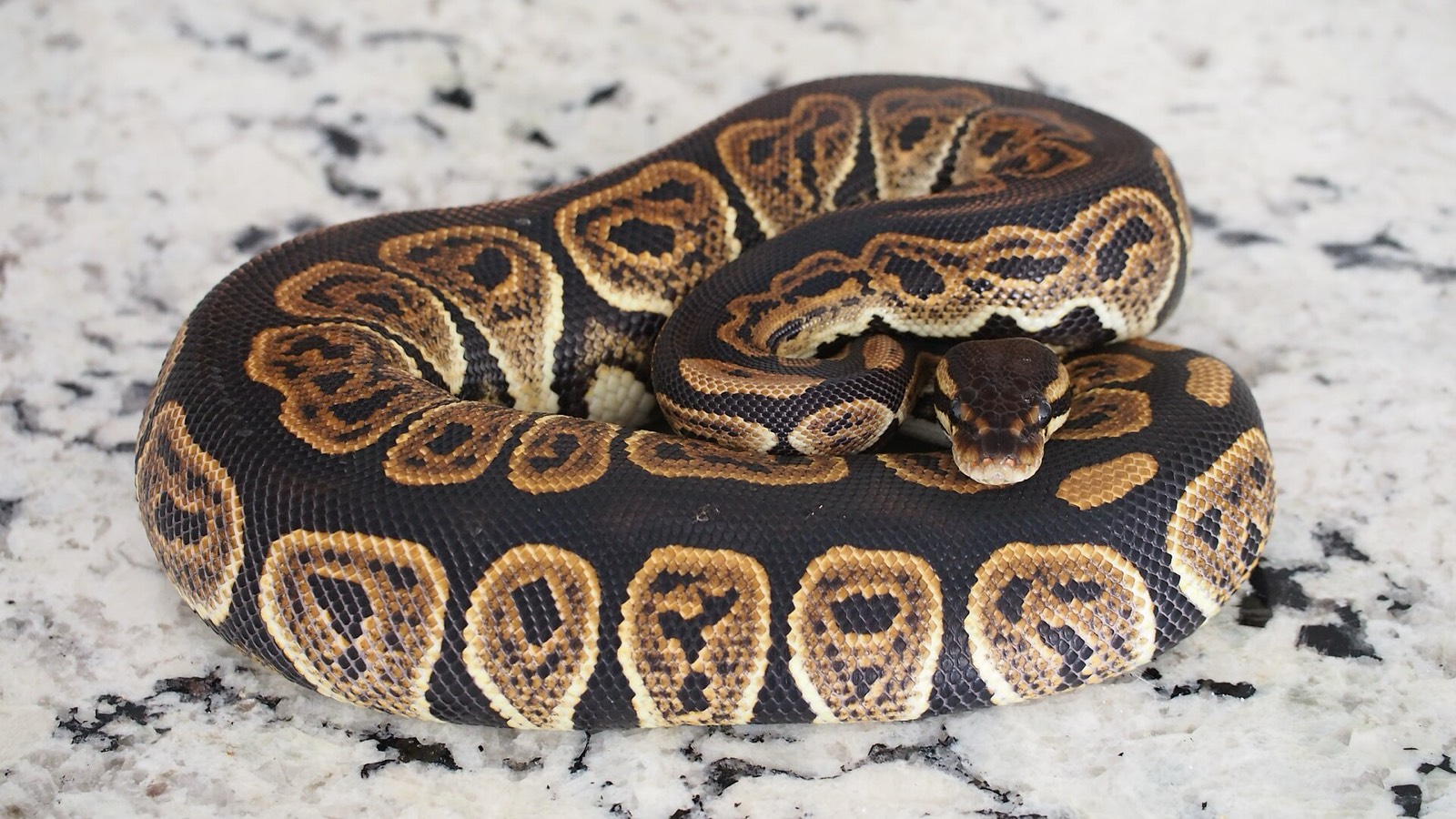
Ball Pythons
The most-traded snake on Earth, and still the best first python.
On the Exchange

Male Coral Glow Super Fader Lesser Het Clown Ball Python


Female Pastel Enchi Lesser Odium PHA/PHP Ball Python

Coral Glow Enchi Pastel Yellow Belly Lucifer Odium Male Ball Python

Male Clown Sugar Ball Python

Male Mojave Pied Ball Python

Male Ultramel Poss. Het Clown Ball Python

Female Lemon Pastel Granite Fader Ball Python

EMG Clown Ball Python
What you're taking on
West African in origin, ball pythons earned the hobby's centre of gravity by being forgiving: they stay under five feet, they tolerate handling, and they have the deepest morph catalogue of any reptile. A healthy captive-bred ball python is the benchmark against which every other beginner snake gets measured.
- Captive-bred, with a feeding record — not an import.
- Clean vent, clear eyes, no retained shed on the tail tip.
- Firm muscle tone; the animal should grip when handled.
- Genetics written out in full, including hets and their odds.
- Ask what it last ate, what size, and on what date.
Keep it right from day one
Famously docile — a ball python curls into a ball rather than bites. The benchmark first python.
Two snug hides, fresh water, a gentle thermal gradient.
Read the morph names
The most morph-rich snake in the hobby — hundreds of base genes combine into endless designer combos. These are the foundation genes you'll see named in listings.
No black pigment — high-contrast yellow and white.
Patches of pure white broken by normal-patterned colour.
Reduced, connected pattern with a clean dorsal stripe and bright head.
Albino base over a lavender-grey ground — yellow on lilac.
A 'tyrosinase-positive' albino — warm caramel and butterscotch tones.
Muted, washed-out melanin giving a soft, smoky look.
Who you can buy from
New England Reptile Distributors, Kevin McCurley's facility in Plaistow, New Hampshire. Ball python genetics since 1989, plus boas, colubrids, monitors, giants and rare reptiles.
Paul Hernandez's collection in Columbus, Ohio: retics, Burmese pythons, anacondas, monitors, tegus, iguanas and other uncommon species. Paul also runs Reptile Adventures live educational shows.